Best CBD Cannabis Strains for Indoor Growing: What to Look For
Choose better CBD strains for indoor spaces by comparing plant size, flowering time, stretch, aroma, grow difficulty, and cannabinoid ratio.

Indoor growing gives you control, but it also gives you limits. Ceiling height, light footprint, airflow, container size, and available time all matter. That is why choosing CBD Cannabis Strains for Indoor Growing should be based on more than CBD percentage alone.
A CBD-rich plant can look perfect on paper and still be a poor fit for a small tent if it stretches hard, flowers too long, or creates more canopy than you can manage. The opposite is also true: a compact, resilient cultivar with a practical flowering window may deliver a much easier indoor run even if it is less famous.
This guide explains how to evaluate CBD Cannabis Strains for Indoor Growing by size, stretch, flowering time, grow difficulty, aroma, cannabinoid ratio, and terpene profile. If you are new to CBD genetics, start with our CBD strains for beginner growers guide as a companion.
Why Indoor Fit Matters More Than Hype

Indoor rooms reward planning. You choose the container size, light height, training method, and environmental range, but the plant still brings its own growth habits into the room. If those habits clash with the setup, you spend the grow correcting problems instead of using the space efficiently.
For example, a vigorous tall cultivar may be excellent outdoors but frustrating under a low ceiling. A compact plant may be easy to control but too slow for a grower who prioritizes quick turnover. This is why there is no universal best indoor CBD strain.
The useful question is: which strain fits this specific room? Once you think that way, CBD Cannabis Strains for Indoor Growing become easier to compare because every trait has a practical context.
Height, Stretch, and Canopy Control
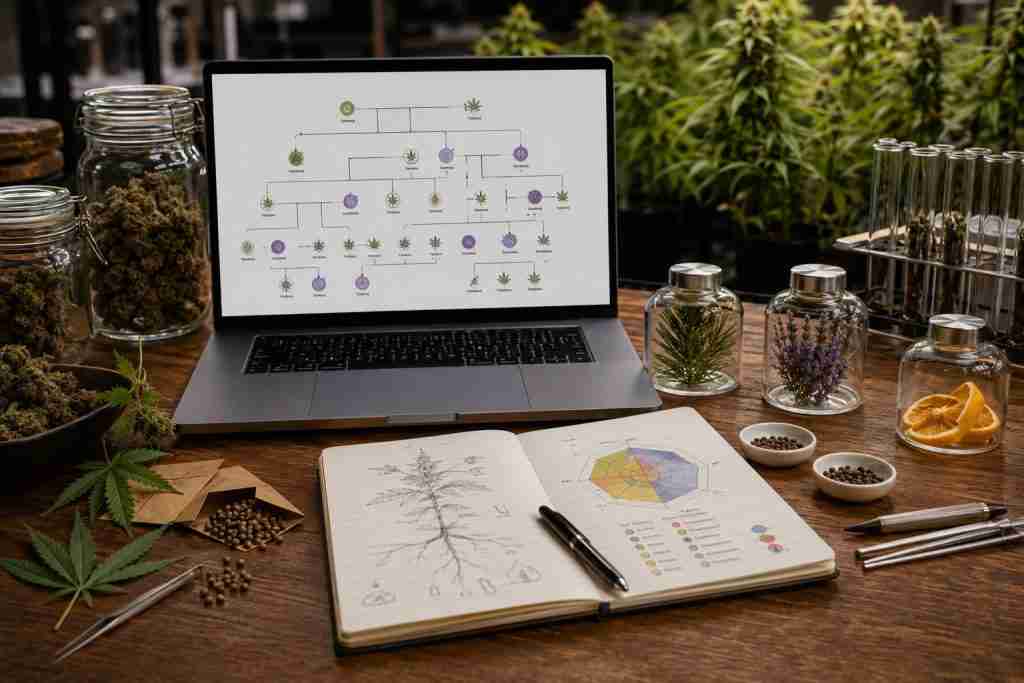
Height is one of the first fields I would check. Indoor plants need vertical room not only for stems and flowers but also for safe distance below the light. A strain that doubles or triples in height during flowering can surprise a new grower.
Look for breeder or database notes about final height, internode spacing, and stretch. Compact and medium-size cultivars are often easier to manage in tents. Taller plants can still work, but they may demand earlier training and more careful timing.
Structure matters too. A plant that branches evenly can be easier to shape into a flat canopy. A narrow plant may suit a different layout. Try to match the natural architecture to the way you prefer to grow instead of forcing every cultivar into the same pattern.
Flowering Time and Indoor Scheduling
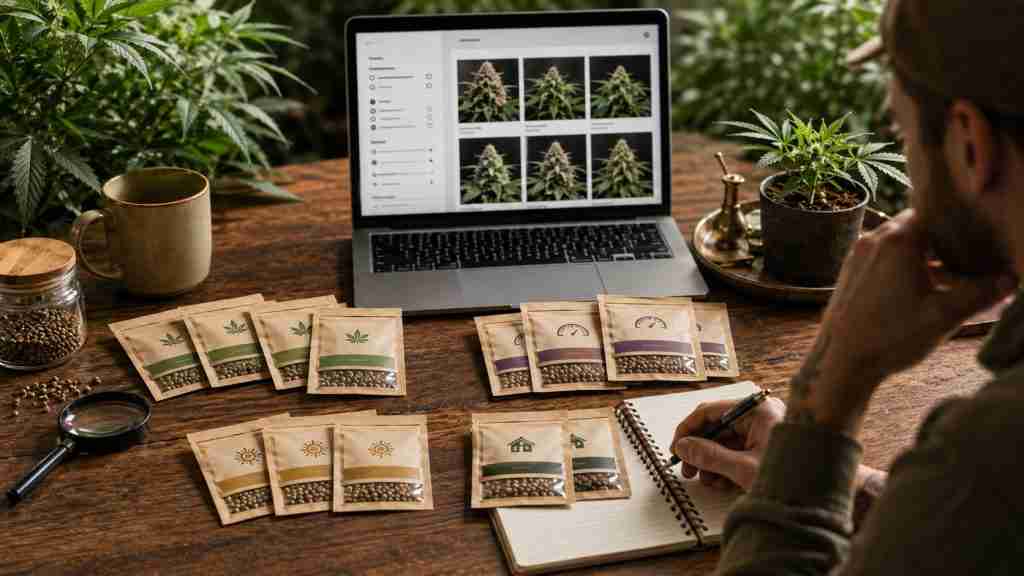
Flowering time has a direct effect on cost, scheduling, and room turnover. A cultivar that finishes in a practical window may be more appealing indoors than one that needs several additional weeks, even when both produce attractive cannabinoid profiles.
This does not mean faster is always better. Some slower lines may be worth the wait. The key is to decide intentionally. If you run one room continuously, a longer flowering strain changes the whole calendar.
If speed is one of your priorities, compare flowering type as well as flowering length. Our CBD autoflower vs photoperiod seeds article explains how the life-cycle decision can change indoor planning.
When comparing CBD Cannabis Strains for Indoor Growing, treat flowering time as a core trait rather than a footnote.
Aroma, Airflow, and the Reality of an Indoor Room
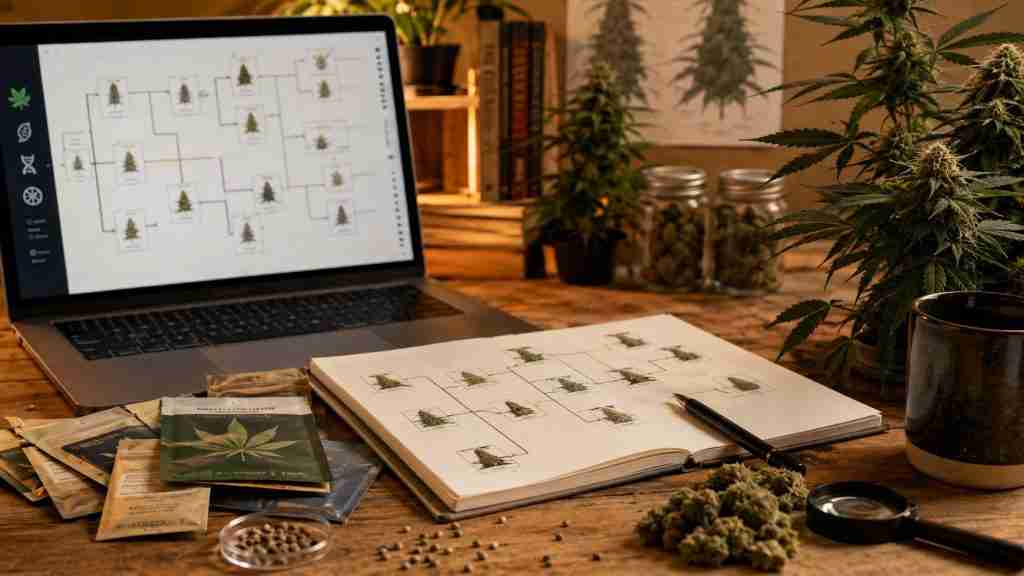
Aroma is part of strain selection, but indoors it also becomes an environmental consideration. Some CBD cultivars can be strongly aromatic. If discretion matters, you need to plan odor control and airflow before flowering gets intense.
Terpenes help explain aroma direction. Limonene can point toward citrus character, pinene toward pine, caryophyllene toward spice, and myrcene toward earthier notes. Our guide to terpenes in CBD cannabis strains goes deeper into how terpene data can help you compare candidates.
Dense indoor flowers also make airflow important. A plant that builds a thick canopy may need more pruning and circulation than an open-structured plant. In humid rooms, that difference can matter as much as yield potential.
Grow Difficulty and Resilience
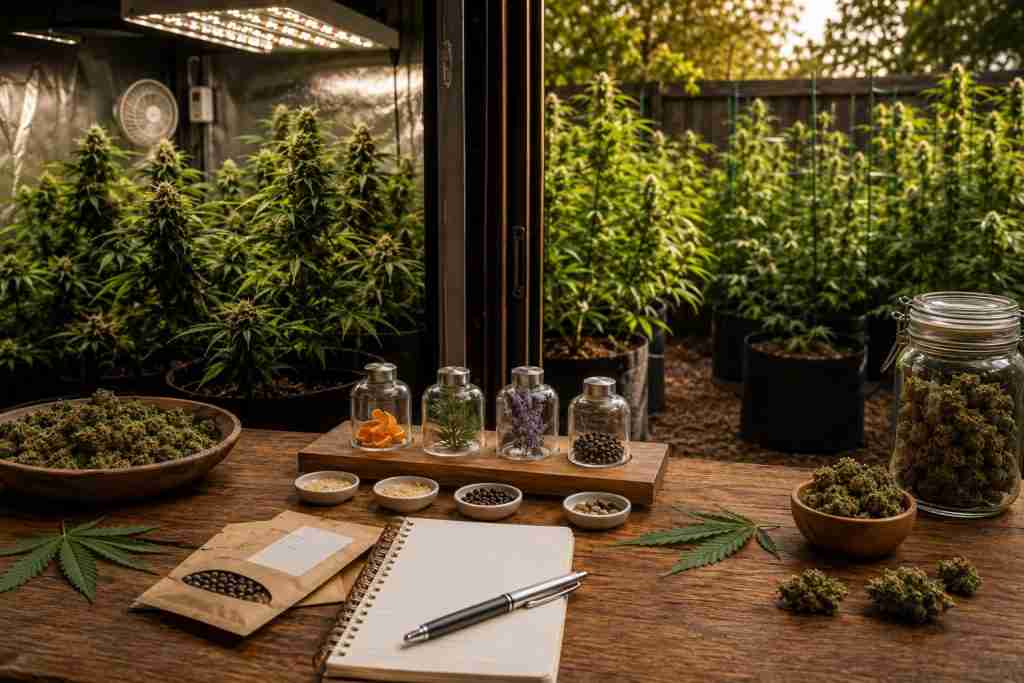
Indoor control does not mean every grow is easy. Some cultivars react strongly to feeding changes, environment shifts, or training. Others are more forgiving. If you are still learning, resilience deserves a high weight in the decision.
Look for strains described as easy or moderate rather than expert-only. Check whether the plant tolerates common training methods and whether the breeder reports strong vigor. These descriptions are not perfect measurements, but they can help you eliminate obvious poor fits.
This is another reason CBD Cannabis Strains for Indoor Growing should be compared on multiple fields. A high CBD number is useful, but it does not tell you how pleasant the plant will be to manage for ten or twelve weeks.
CBD Ratio, THC Level, and Terpene Direction
Once the plant fits the room, compare the chemistry. Some growers want CBD-dominant Type III-style genetics with very low THC potential. Others want more balanced Type II-style plants. Those are different goals and should be treated that way from the start.
Our CBD-to-THC ratio guide explains how to compare those categories without reducing the decision to one number. You should also look at terpene direction, because two plants with similar cannabinoid ranges can differ substantially in aroma and overall character.
If you want to compare CBD genetics against more THC-forward options, see CBD cannabis seeds vs high-THC seeds. That can help clarify what kind of indoor harvest you are actually trying to build.
How to Build an Indoor CBD Shortlist
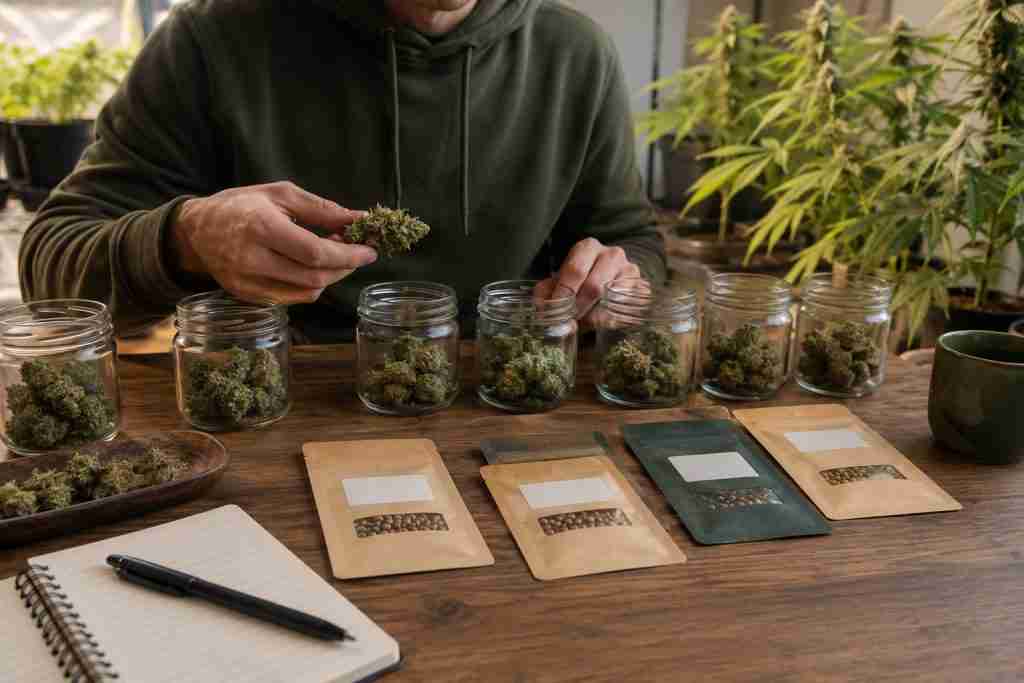
Start by writing down the physical limits of the room: maximum plant height, number of containers, light footprint, and preferred flowering window. Then define the cannabinoid target. After that, filter by grow difficulty and aroma direction.
This creates a useful sequence: room fit first, chemistry second, preference third. It keeps you from falling in love with a profile that was never practical for your setup.
If you need a larger database to compare candidates, our guide to finding CBD strains at Find My Seeds shows how to research and compare CBD-rich profiles online.
The strongest CBD Cannabis Strains for Indoor Growing are the strains that satisfy both sides of the decision: they fit the room and they fit the kind of CBD-rich flower you want.
Container Size, Training Style, and Root-Space Fit
Indoor strain choice is also connected to container strategy. A vigorous cultivar in a small container may require more frequent irrigation and closer management, while a compact plant can be easier to balance. If you prefer larger containers and fewer plants, you may tolerate more stretch because each plant has more room to develop.
Training style matters in the same way. Growers who enjoy topping, bending, or building an even canopy can work with genetics that would feel too unruly for someone who prefers minimal intervention. The strain should match the grower’s management style, not only the room dimensions.
Think of plant architecture, pot size, and training as one system. Good indoor planning happens when all three support each other.
Think About Plant Count and Canopy Strategy
Two indoor growers can use the same tent and still need very different genetics. One may run a small number of larger plants, while another prefers more plants kept compact. That difference changes what “good indoor strain” means. A cultivar with strong side branching may suit a broad canopy. A narrower plant may fit a denser layout. Before choosing seeds, decide whether you want each plant to occupy a large footprint or a small one.
Plant count also affects how much variation you can tolerate. If you run only one or two plants, a very variable seed line can create an unpredictable canopy. A more uniform line may be easier to manage. If you run a larger population and enjoy selection, some variation may be welcome because it gives you more expressions to compare.
Use Your First Indoor Run as Data
No database can know your room as well as you eventually will. Keep notes on stretch, final height, watering frequency, flowering duration, aroma intensity, and how the plant reacted to your normal environment. After harvest, compare those notes with the original description. That tells you which breeder fields were most useful and which traits mattered more than you expected.
The next time you shop, use your own results as a filter. If the first cultivar became too tall, prioritize shorter genetics. If it finished comfortably but yielded less than you wanted, adjust that priority. Indoor strain selection improves quickly when each grow becomes feedback for the next one.
How to Compare Two Indoor CBD Candidates
If two strains both fit your CBD target, compare them in a fixed order. First compare final height and stretch. Next compare flowering time. Then look at grow difficulty and environment notes. After that, compare terpene direction and reported yield. This keeps the decision grounded in cultivation before preference.
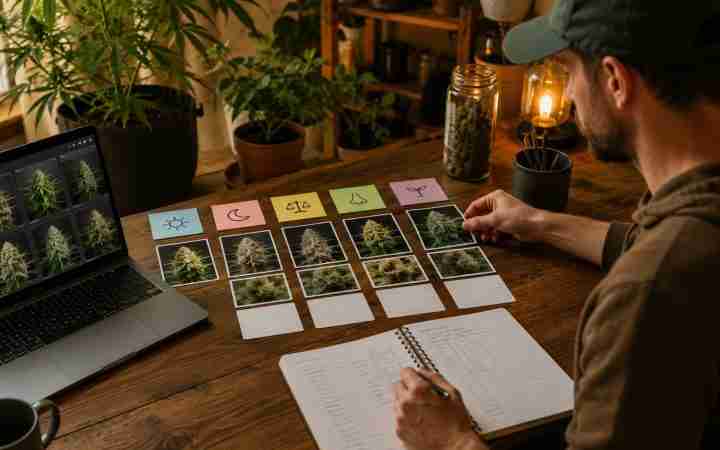
A simple scorecard can help. Give each strain a score from one to five for height fit, flowering-time fit, ease of growth, cannabinoid fit, and aroma preference. The goal is not to create scientific precision. It is to stop one exciting trait from hiding several practical weaknesses.
Also compare breeder versions carefully. The same familiar strain name can be offered by different breeders with different parent selections and different indoor behavior. Read the specific listing rather than assuming the name tells the whole story.
Indoor CBD Strain Checklist
- Will the plant fit my available height after stretch?
- Is the flowering time practical for my room schedule?
- Is the strain easy enough for my experience level?
- Can I manage the likely canopy density and airflow needs?
- Does the CBD-to-THC ratio match my goal?
- Do I like the expected terpene and aroma direction?
Frequently Asked Questions
Are autoflowers always better indoors? No. They can be convenient, but photoperiod plants give you more control over vegetative time. Choose based on your workflow.
Should beginners avoid tall CBD strains? Not necessarily, but compact or medium-height cultivars are usually easier to manage in limited spaces.
Does a high CBD percentage make a strain good indoors? No. Chemistry and cultivation fit are separate questions.
Can outdoor CBD strains work indoors? Sometimes, but check size, stretch, and flowering behavior before assuming the fit will be good.
Use those filters consistently and your list of CBD Cannabis Strains for Indoor Growing will become shorter, clearer, and more useful.

Related CBD guides
CBD Cannabis Genetics Explained: Type II, Type III, and Stable CBD Ratios
Understand Type II and Type III CBD cannabis genetics, cannabinoid ratios, stability, variation, and what breeder information can really tell you before you buy seeds.

How to Germinate CBD Cannabis Seeds: Common Mistakes and What to Look For
A beginner-friendly guide to starting CBD cannabis seeds carefully, recognizing normal germination, and avoiding the most common moisture, temperature, and handling mistakes.