CBD for Restless Legs: Nighttime Routine When RLS Is Not Just ‘Twitchy Legs’
Treat RLS as a neurologic sleep disorder. Check iron. Then decide if evening CBD is a reasonable add-on for the restlessness and sleep hit.
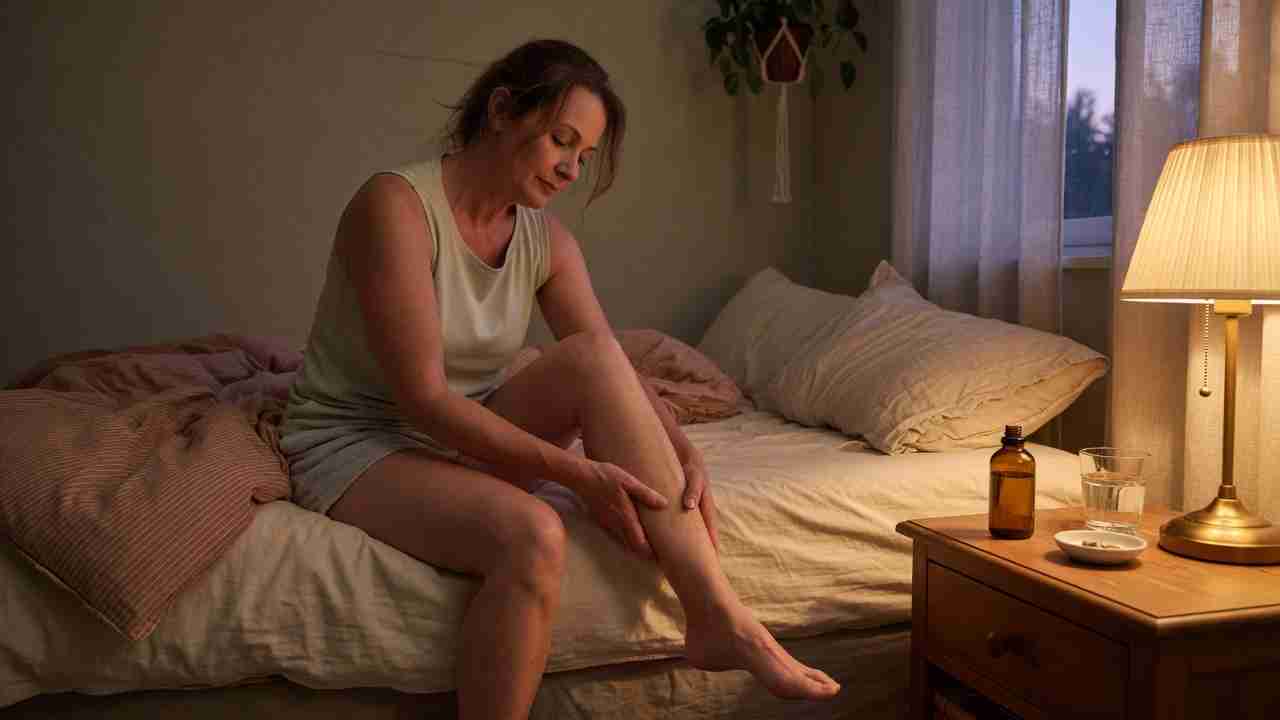
Google CBD for restless legs and you get gummies for “twitchy legs,” as if restless legs syndrome were a fidget. RLS is a neurologic sleep disorder. The urge to move hits at rest, worse in the evening, eased briefly by walking, and it wrecks sleep. The National Institute of Neurological Disorders and Stroke ties it to brain iron deficiency and, for moderate to severe disease, to dopaminergic medicines. A hemp dropper does not replace a ferritin check.
Read the disorder from the source, not from a brand blog: Restless legs syndrome (NINDS). There are no large CBD-specific RLS randomized trials. What you will find is anecdote, plus adjacent sleep and anxiety data that may or may not map onto the urge-to-move. If evening CBD has a lane, it is as an add-on for the tension and the sleep hit around RLS — after iron is addressed, after caffeine and alcohol are honest, and after you know when to see neurology instead of a gummy aisle.
Caffeine, alcohol, and antihistamines can worsen RLS. Evening dosing, if you try hemp at all, sits 60–90 minutes before bed. Skip a stimulating low-dose morning CBD if it seems to worsen restlessness. One-sided, painful, or progressive symptoms are not a wellness project.
RLS is a diagnosis, not a vibe in the calves
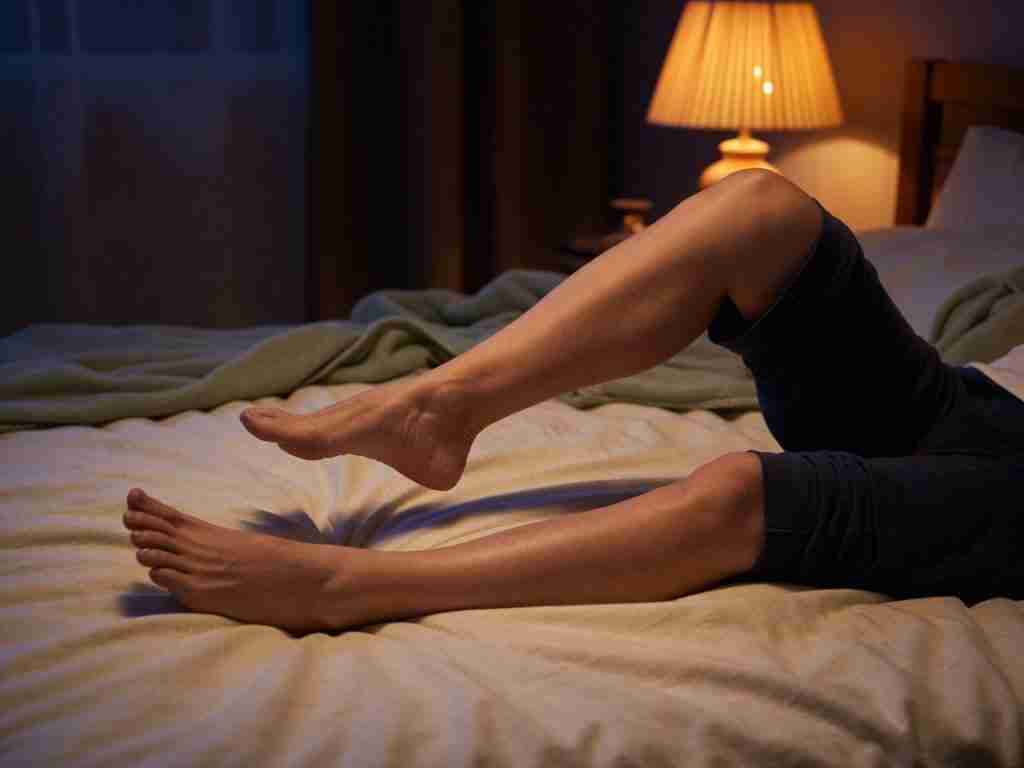
People call many night sensations restless legs. Night cramps are painful contractions. Peripheral neuropathy is burning or numb, often in a stocking pattern. Akathisia from a drug is a different restlessness. Periodic limb movements in sleep are a lab finding your partner may notice. RLS has a specific shape: uncomfortable urge to move the legs, begins or worsens during rest, worse later in the day, and temporary relief with movement. If that pattern is not yours, stop shopping RLS products and describe the actual symptom to a clinician.
| Lever | What it is for | Evidence / authority | Where hemp CBD sits |
|---|---|---|---|
| Serum ferritin / iron repletion | Brain iron is implicated in RLS; low ferritin is a treatable contributor | NINDS: check iron. Repletion is clinician-directed, not a supplement guess. | Does not replace the lab. Do the bloodwork first. |
| Dopaminergic and other RLS meds | Moderate–severe RLS | Standard prescription care. Augmentation is a known long-term issue with some agents — specialist territory. | Not a substitute. Never stop a dopamine agonist to “switch to CBD.” |
| Caffeine, alcohol, antihistamines | Common aggravators | Clinical observation and NINDS-style trigger lists | Fix these before you credit or blame a tincture. |
| Sleep timing and stretching | Reduce the evening rest window and muscle tension | Sleep-hygiene and PT-style self-care, not a cure | Pair, do not replace. See CBD oil for sleep if insomnia is the leftover problem. |
| Evening oral CBD | Possible help with sleep disruption and “wired” tension | No large CBD-specific RLS RCTs; anecdote and adjacent anxiety/sleep data only | Adjunct experiment, 60–90 min pre-bed, logged. |
Pregnancy, kidney disease, and neuropathy change the workup. So does a medicine list that already includes metoclopramide, some antidepressants, or sedating antihistamines. Bring the list. A new hemp habit on top of a diphenhydramine sleep aid is how people muddy both the RLS and the next-day hangover.
What CBD might touch — and what it cannot
CBD is not a dopamine agonist. It will not fill a brain-iron gap. People still reach for it because RLS wrecks sleep and because the wait-for-bed hours feel like anxiety in the legs. Adjacent literature on sleep and stress is not an RLS label. It is a reason some people notice that an evening oil takes the edge off the second problem — the rumination and the muscle bracing — while the first problem, the urge, still needs iron and, if severe, a neurologist.
That adjacent lane is why we already wrote CBD for stress as its own page. Do not collapse “I unclenched my jaw” into “my RLS is treated.” If the urge to move is unchanged and you merely slept through it, say that in the log. It is a legitimate sleep outcome. It is not disease modification.
Low-dose CBD is alerting for some people. Higher evening milligrams are sedating for others. If a 10 mg morning isolate makes you feel bright and your legs worse at rest later, you have a timing problem, not a reason to double the morning dose. Timing details live in best time to take CBD. For RLS, default to evening-only until you know otherwise, 60–90 minutes before the time the urge usually starts, which is often before you actually get in bed.
A night routine that treats RLS as RLS
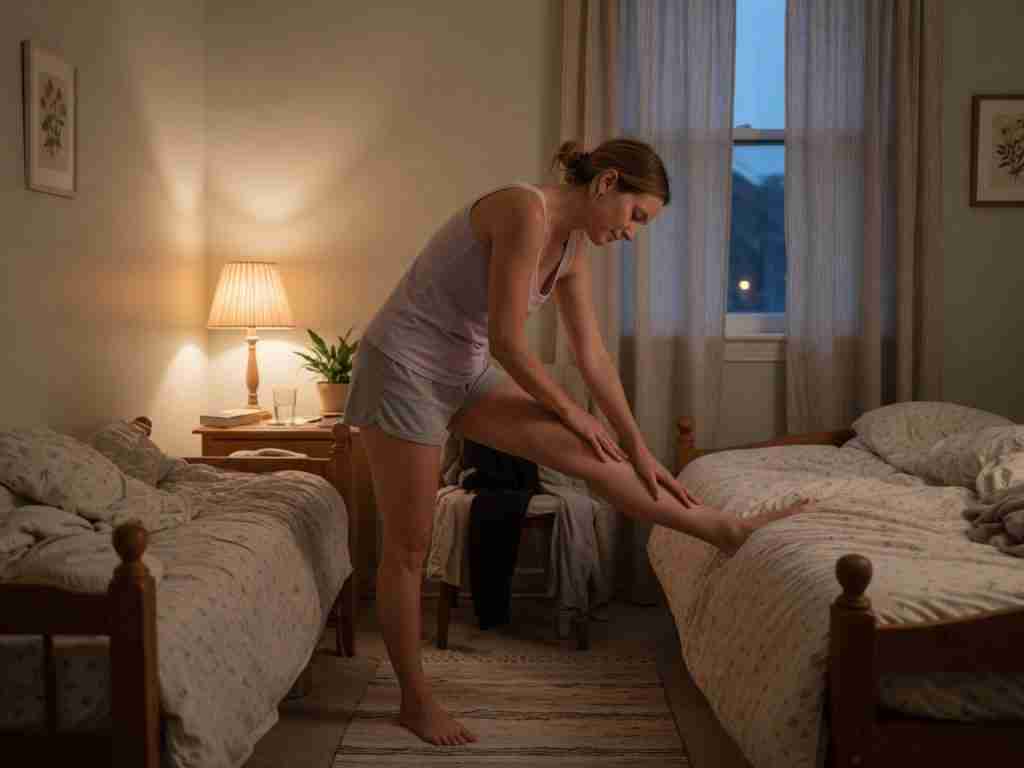
Do the unfashionable work before the dropper. The list is short on purpose. People fail it by adding six new supplements the same week they finally check ferritin.
- Get ferritin (and the rest of the iron panel your clinician wants). Do not start iron on a forum dose. Too much iron is a disease of its own.
- Write down caffeine last-call, alcohol, and every antihistamine, including PM painkillers and seasonal allergy tabs. Cut what you can for two weeks. Cold medicine is a frequent silent aggravator.
- Pick a lights-out window and a wind-down that includes calf and hamstring stretches, not a phone in bed. Movement that actually uses the legs in the evening can help; a 10 p.m. workout that dumps you into a wired rest can hurt.
- If a clinician has already prescribed an RLS medicine, take it as written. CBD does not get a vote.
- If you still want an adjunct hemp trial, use a COA-matched oil or capsule, not a “sleep gummy” that is mostly melatonin. Melatonin is a clock signal. RLS is not jet lag.
- Dose 60–90 minutes before bed. Hold the milligram for at least a week. Typical consumer starts elsewhere on this site are 10–25 mg — not epilepsy milligrams, not a 150 mg “knockout.”
- Log clock time of first urge, whether walking helped, sleep minutes lost, milligrams, and whether the next morning felt hungover. If symptoms are only in one limb, painful rather than urge-like, or clearly getting worse week to week, stop self-experimenting and get a neurologic exam.
- Skip morning CBD if restlessness climbs. Do not add alcohol “to sleep.” Do not add a sedating antihistamine to the hemp on night three because the first two nights were noisy.
Hotels, late flights, and sitting in a theater are classic RLS traps because they force rest at the wrong clock time. A travel bottle of oil will not replace walking the aisle. If you use oral CBD when you travel, keep the same milligram you already tolerate. New cities are the wrong place to titrate.
Format still matters once you decide on an adjunct. Oil or a capsule with a printed milligram is readable. A “sleep gummy” that is 5 mg CBD plus 5 mg melatonin is a clock drug with a hemp garnish; if you sleep better, you have not learned anything about CBD and RLS. Cream on the calves is a comfort ritual, not a ferritin plan — fine as moisturizer, useless as a stand-in for the workup. Isolate is the cleaner test if you are employment-screened. Full-spectrum evening oil adds a THC variable you do not need while you are watching an urge that already wrecks sleep.
A useful log line looks like this: “10:15 p.m., 20 mg isolate oil, urge at 10:40, walked 8 minutes, in bed 11:05, last movement 12:20, up at 6:40, next-day fog 2/10, ferritin last checked March.” If you cannot fill those fields, you are collecting vibes. Two weeks of that line is more informative than a five-star review on a bag of gummies.
Red flags that are not a gummy
One-sided symptoms, true pain rather than urge, weakness, numbness in a saddle pattern, bowel or bladder change, or a rapid march in severity is neurology or the emergency department, not a tincture. RLS can be secondary to iron deficiency, pregnancy, or kidney disease; those get treated as themselves. Periodic limb movements plus daytime sleepiness can hide sleep apnea. If you snore and gasp, a hemp nightcap is a sideshow.
Augmentation — symptoms that start earlier in the day, spread, or intensify after long use of some dopaminergic drugs — is a specialist problem. People sometimes add CBD on top of a worsening pattern and miss the medicine effect. If your RLS is crawling into the afternoon, call the prescriber. Do not stack.
Workplace drug tests still look for THC metabolites, not CBD. Full-spectrum evening oil is a poor idea if you are tested. Isolate with a matching COA is the lower-risk hemp format, still not a promise. That problem is documented on this site’s drug-test piece; it is not unique to RLS, but night users of full-spectrum oils forget it.
FAQ
Will CBD cure restless legs syndrome?
No. There are no large CBD-specific RLS randomized trials. CBD is not a replacement for ferritin workup or for dopaminergic medicines used in moderate to severe RLS. At best it is an adjunct for sleep disruption and tension around the disorder.
When should I take it if I try it?
Evening, 60–90 minutes before bed. Avoid a stimulating low-dose morning CBD if restlessness worsens. Hold the milligram steady long enough to read sleep, not one noisy night.
What should I stop doing first?
Late caffeine, alcohol as a sleep tool, and antihistamines when they are optional. Those can worsen RLS. Stretch and set a sleep time. Check iron with a clinician. Then consider hemp, not the other way around.
When is this an emergency or a neurology visit, not a supplement?
One-sided, painful, or progressive symptoms; weakness; numbness that does not fit RLS; bowel or bladder change. Also any new RLS in the setting of severe daytime sleepiness, pregnancy decisions, or kidney disease. See a clinician. Do not titrate a gummy.
Disclaimer: This article is for education only. It is not medical advice and is not a treatment plan for restless legs syndrome or any neurologic disease. CBD products are not FDA-approved to diagnose, treat, cure, or prevent any disease, except the prescription medicine Epidiolex for certain seizures. Talk to a clinician before using hemp CBD, get recommended iron studies, and do not stop prescribed RLS medicines to make room for a tincture.

Related CBD guides
CBD vs Melatonin for Sleep: Which One Matches Your Problem
Melatonin is a clock signal. CBD is not. Use this split — jet lag vs racing mind vs 3 a.m. wake-ups — instead of stacking random sleep gummies.