CBD for Fibromyalgia: Surveys, THC Oils, and What OTC Hemp Can Realistically Do
Fibromyalgia users report CBD helps. Trials are small and often use THC-containing oil. Here is a conservative OTC plan and what to track.

Type CBD for fibromyalgia and you will find two piles: surveys in which people with fibromyalgia already using CBD say it helps, and small trials that often include THC. Both piles are real. Neither is a reason to drop prescribed care. Fibromyalgia is sleep plus pain plus fatigue. A milligram number that ignores pacing, sleep, and the clinician who already knows your FIQR is a shopping article, not a plan.
Boehnke and colleagues surveyed people with fibromyalgia about CBD in the Journal of Pain (2021). Many reported symptom help. It was observational — self-selected, unblinded, the exact design that overrates every supplement. A 2026 randomized pilot of 1:1 THC:CBD marijuana oil versus placebo in 24 adults is a different object: 70% versus 40% hit a 30% pain cut at week 12. That oil is not isolate CBD. Ranking pages quote the 70% and forget the THC.
NCCIH’s cannabinoid overview is the federal baseline for how thin much of this literature still is: cannabis and cannabinoids — what you need to know (NCCIH). For adjacent habits that actually move FM days, see CBD for pain relief, CBD for stress, and CBD oil for sleep. CBD is not a replacement for prescribed FM care.
Survey hype versus a 24-person oil trial
| What you will see cited | Design | What you can honestly take |
|---|---|---|
| Boehnke 2021, Journal of Pain — national survey of people with FM using CBD | Observational. Thousands screened; users report help; many also substituted for other meds in related analyses | People with FM already use CBD and often feel it helps. That is popularity plus placebo plus maybe a signal. It is not efficacy. |
| Related Boehnke substitution analysis | Among current CBD users, many reported substituting for NSAIDs, opioids, gabapentinoids, benzos | Do not self-taper those drugs because a survey said substitution is common. Tell the prescriber. |
| 2026 RCT, 1:1 THC:CBD cannabis oil vs placebo, 24 adults | Double-blind pilot; 4-week titration, 12-week stable evening dose; oil 10 mg/ml each | 70% vs 40% hit ≥30% pain cut at week 12. Sleep and FM impact also leaned cannabis. Fatigue/anxiety did not clearly move. Small sample. |
| OTC hemp isolate gummies | Not what the 2026 trial used | You cannot paste 70% onto a THC-free 15 mg gummy. Wrong product. |
| NCCIH class reviews | Cannabinoids for pain more broadly | Modest, mixed, often THC in the mix. FM-specific CBD-only RCTs remain thin. |
Boehnke’s 2021 prevalence paper is worth the sample size even though it cannot prove efficacy. After incomplete surveys were dropped, 2,701 people with fibromyalgia answered: 38.1% never used CBD, 29.4% had used it in the past, and 32.4% were current users. Past-year cannabis use tracked with CBD use. People typically started because other symptoms were not well controlled; people who avoided CBD often cited safety. Two-thirds told a physician they used it, but only about a third asked that physician how to use it. That gap — disclosure without advice — is how milligrams and THC content go unsupervised.
The 2026 pilot (Kurlyandchik and colleagues, Pain Research and Management) was built to test feasibility as much as pain. Twenty-four adults, 1:1 THC:CBD oil at 10 mg/ml each, evening dosing after a four-week titration. Retention was high. Adverse events were mostly mild in that small sample. Secondary signals favored the oil for pain, sleep quality, and fibromyalgia impact; 40% vs 10% hit a predefined clinically meaningful FIQR improvement. Fatigue and anxiety/depression did not show significant changes. That last sentence is the one sleep-and-pain stacks skip. FM is three problems. An oil that moves pain and sleep and leaves fatigue alone is not a full-court press.
FM is sleep, pain, and fatigue — milligrams are one lever
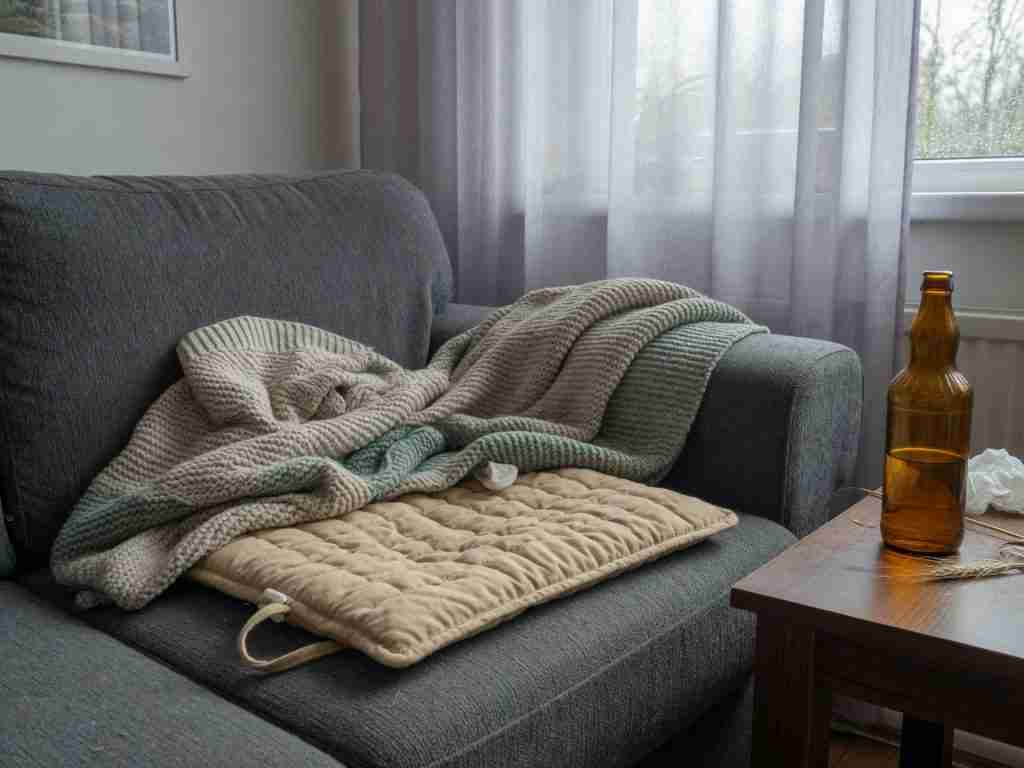
If you only shop for pain milligrams, you will miss the night. Unrefreshing sleep makes the next day’s pain louder. Pain makes pacing collapse. Pacing collapse makes fatigue look like laziness to people who do not have FM. CBD, if it belongs anywhere in that loop, is usually an evening adjunct people use for the pain-sleep edge — not a fatigue drug, and not a replacement for the boring work: consistent wake time, a flare plan, and not stacking three new supplements in a crash week.
Start low. Sedation and next-day fog are common complaints with cannabinoids in this population, especially if the product contains THC or you combined it with a gabapentinoid, a muscle relaxant, or alcohol. A “helpful” first night that costs you the morning is a net loss on an FM calendar. Isolate or a modest oral CBD dose is a different hangover profile than 1:1 THC:CBD oil. The trial that posted 70% used the latter. Your grocery isolate is the former.
Heat, a blanket, and a reduced evening demand are not alternative medicine. They are how you stop asking a dropper to do the job of a lighter day. If you add CBD, add it on a stable week, not on the week you also start a new antidepressant and a new gym program.
A conservative OTC hemp plan (not the 2026 oil)
This is for people who will try store CBD anyway. It is not the Australian 1:1 trial. It is not a protocol to abandon duloxetine, milnacipran, cyclobenzaprine, or whatever you already use.
- Tell the clinician who manages your FM. Bring the COA. Ask about interactions with your current list.
- Choose isolate or broad-spectrum if you must stay THC-light (work, driving, no-THC preference). Choose full-spectrum only if you accept a THC variable and your clinician is in the loop.
- Start 10–15 mg oral CBD in the evening with food. Hold 5–7 days. Step 5–10 mg if fog is absent and you want another look. You are not titrating to trial-level THC oil at home.
- Do not buy a “FM blend” that hides melatonin, CBN, and 2 mg of CBD. You will not know what to keep.
- Log three numbers, 0–10, for 14 days: evening pain, sleep quality, next-day fog. If pain is unchanged and fog is up, stop. If sleep is up and mornings are wrecked, you overshot sedation.
- Pacing stays in the plan whether the bottle works or not. A good evening is not permission to spend the next day like you do not have FM.
Pacing is the part the dropper cannot do
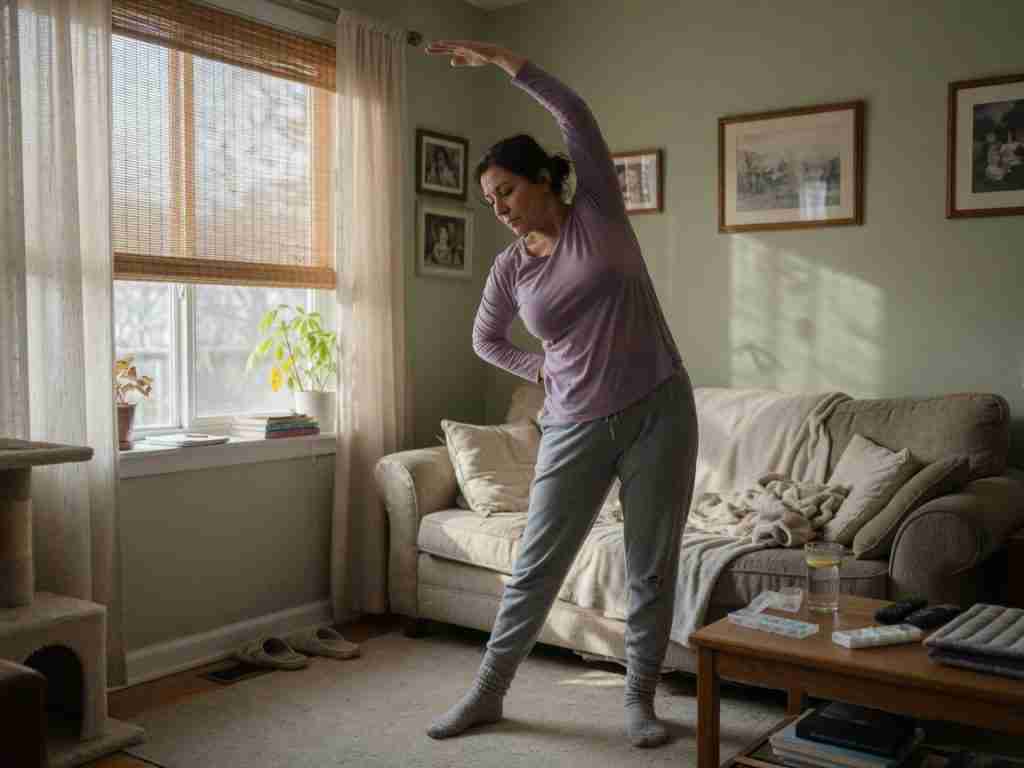
Pacing is splitting a day’s demand so you do not pay for Tuesday on Thursday. Cannabinoid marketing hates it because it is free and unglamorous. It is also the intervention FM clinics actually repeat.
- Plan one physically heavy task per day, not four. Put it before the crash window you already know.
- Sit before you need to. Standing in a kitchen “until it’s done” is how flares get built.
- Protect a wind-down hour. If you trial evening CBD, this is when it goes — not in a parked car after a 12-hour day.
- Track crashes the way you would track milligrams. A week of “I felt great so I caught up on everything” is data that you used the good day wrong.
- Stress spikes pain in this condition. A CBD stress experiment belongs in the log as stress, not as proof the pain pathway changed. See the stress article rather than doubling the sleep gummy.
If THC:CBD oil is legal and prescribed where you live, that is a clinician conversation informed by a 24-person pilot, not a blog protocol. Driving rules, workplace tests, and next-day fog all change when THC is on board. If all you can buy is hemp CBD, keep the claims at “maybe sleep and edge,” and keep the prescribed stack. Do not treat a survey substitution rate as permission to cut opioids or gabapentinoids on your own — Boehnke’s related analysis found many users reported substituting, which is a research signal and a clinical hazard if you freelance it.
What ranking pages skip
They skip that Boehnke 2021 is a survey. They skip that the 2026 RCT used equal THC+CBD marijuana oil in 24 adults, 70% vs 40% at a 30% pain cut — not isolate. They skip fatigue as a third pillar. They skip start-low because fog is common. They skip “not a replacement for prescribed FM care” because it does not convert. NCCIH’s cannabinoid page is linked above because it will still be there when the next 24-person oil study is quoted as settled science.
People with fibromyalgia have been ignored by medicine for years. That history is why supplement pages work. It is also why you deserve numbers instead of a leaf and a testimonial. Use the survey as a popularity signal. Use the 2026 oil trial as THC-plus-CBD, small-n, preliminary. Use store hemp as an optional adjunct with a stop date. Keep the clinician.
FAQ
Should I buy isolate or full-spectrum for fibromyalgia?
Isolate or broad-spectrum if you need to minimize THC (driving, work, no-intoxication preference). The 2026 pain signal that people quote used 1:1 THC:CBD oil, which is not grocery isolate. Full-spectrum is a middle object with more variables, including fog.
Is the 2026 trial proof that hemp CBD works for FM?
No. It was a 24-person feasibility RCT of equal THC+CBD marijuana oil versus placebo. Seventy percent versus 40% hit a 30% pain cut. That is preliminary, small, and the wrong product to map onto OTC isolate.
What should I track besides pain?
Sleep quality and next-day fog, plus whether you paced or spent the good day. FM is sleep, pain, and fatigue. A log that only has pain milligrams will lie to you.
Can CBD replace my prescribed FM care?
No. Not a replacement for prescribed FM care. Do not self-taper SNRIs, gabapentinoids, or other prescribed drugs because a survey reported substitution.
Disclaimer: This article is education, not medical advice, and not a treatment plan for fibromyalgia or any disease. CBD products are not FDA-approved to diagnose, treat, cure, or prevent any disease. Talk to a clinician before you add CBD or any cannabinoid, and do not stop prescribed care to make room for a tincture.

Related CBD guides
CBD for Neuropathy and Nerve Pain: What the Evidence Actually Says
Neuropathy research is stronger for THC/CBD combinations than for isolate tinctures. Use this to set expectations and pick a format.