CBD Flower vs Oil: Inhaled Hemp, Tinctures, and Which Format Fits
Hemp flower is fast and imprecise. Oil is slow and measurable. Use this comparison if you are choosing between a jar of buds and a dropper.
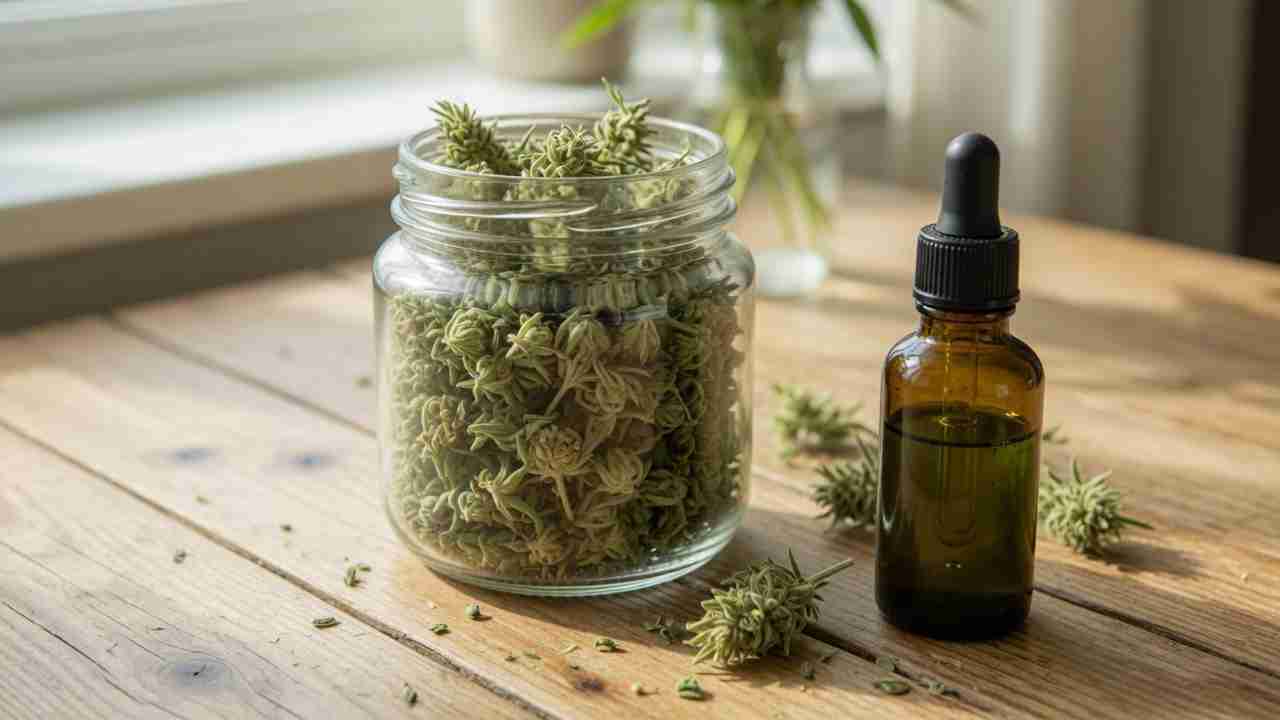
CBD flower vs oil is not a flavor contest. It is onset versus milligram control, lungs versus liver, and whether a hotel security tray treats your “wellness hemp” as cannabis. Flower hits in minutes and is hard to milligram. Oil is slower and countable. Ranking pages call both “CBD” and stop. Smell, lung load, drug-test risk, and whether the jar actually tested at or under 0.3% delta-9 THC by dry weight are what decide the pick.
Inhaled cannabinoids typically onset in minutes and last about 1–3 hours. Oral oil is more like 30–120 minutes on, 4–8 hours off. Hemp flower must test at or below 0.3% delta-9 THC by dry weight under the Farm Bill frame; hot lots exist. You cannot do dropper math on buds without a scale and a lab. Combusted smoke carries lung irritation and smoke toxins; a dry-herb vape is cleaner than a joint and still not a health food. Hotels, flights, and some workplaces treat flower as cannabis regardless of the CBD story.
FDA’s consumer update is the external reminder that hemp products are still cannabis-derived products with real rules and real gaps: What you need to know about products containing cannabis or cannabis-derived compounds (FDA). If you already know you want something countable and swallowable, start with oil vs capsules vs gummies instead of a bud jar.
Onset, duration, and the milligram you cannot count
Flower is a lung product. Alveoli do not wait for the liver. That is why people who want a short, noticeable window like it, and why people who want a measured 25 mg at 9 p.m. should not. Oil is a gut and mucosa product. You can hold it, you can read a 0.5 ml mark, and you can log milligrams. You also wait. Bioavailability differs by route; inhaled is typically higher, oral is typically worse. That math is CBD bioavailability, not a brand slogan.
| Question | CBD / hemp flower | CBD oil (tincture) |
|---|---|---|
| Onset | Minutes if inhaled | About 30–120 minutes swallowed; faster if truly held sublingual |
| Felt duration | Often about 1–3 hours | Often about 4–8 hours |
| Dose control | Need a scale plus a lab %; still an estimate per puff | Marked 1 ml dropper; mg/ml from the label if the COA matches |
| Lungs | Smoke toxins if combusted; irritation possible even when vaped | None, unless you foolishly vape a mouth oil |
| Smell / discretion | Obvious. Hotels and hallways notice. | Mostly private; breath and bottle odor are milder |
| THC / test risk | Must be ≤0.3% delta-9 by dry weight; hot lots exist; flower is still plant matter | Isolate can be non-detect; full-spectrum can carry trace THC |
| Travel and work | Often treated as cannabis, including TSA and hotel policy | Oil still has rules; it looks like a supplement, not a bag of buds |
| Who it fits | Short window, experienced inhalers, people who already vape herb | Beginners, milligram logs, evenings you want to last |
A joint of “CBD flower” is not a 10 mg gummy. Moisture, how hard you pull, side-stream, and whether the lot was 12% or 18% CBD change the lungful. Brands that sell eighths with a QR to a COA are doing the minimum. Brands that sell “high CBD buds” with no lot test are selling incense.
If you still want a number from flower, do the ugly arithmetic and then discount it. One-tenth of a gram of flower listed at 15% CBD is 100 mg of plant with 15 mg of CBD on the COA — if the lab was honest, if the jar matches the lot, and if you somehow absorbed every milligram, which combustion and side-stream will not allow. You will not. Treat 15 mg as a ceiling, not a serving. Without a 0.01 g scale you do not even have the 0.1 g. Pre-rolls are worse: you did not pack them, you cannot see the trim, and the paper is not a lab.
Legal hemp is a lab number, not a vibe in a jar
Hemp flower is Cannabis sativa that tested at or under 0.3% delta-9 THC by dry weight (the federal hemp definition people mean in this conversation). That is a lot test, not a strain name. Hot lots — flower that comes back over the line, or that converts more THCA toward THC depending on how you measure — exist. Some states and some labs argue total THC versus delta-9 only. If you care about a job screen or a traffic stop, “the budtender said hemp” is not a COA.
Oil made from hemp can be isolate (CBD only), broad-spectrum, or full-spectrum. Flower is, by nature, a full-plant smoke or vapor: CBD plus whatever else that chemotype made, including a legal trace of THC if the lab is honest. People who fail tests on “CBD flower” are not always lying. They inhaled a plant that was allowed to contain THC at the hemp threshold, or a plant that missed the threshold.
Quality rules do not change because it is pretty. Pesticides, heavy metals, and mold are uglier in something you inhale than in something you swallow once. Demand a full panel, not a potency selfie. How to shop that standard: how to choose quality CBD. Apply it to the jar, not only to droppers.
Lungs, hotels, and the social reality of flower
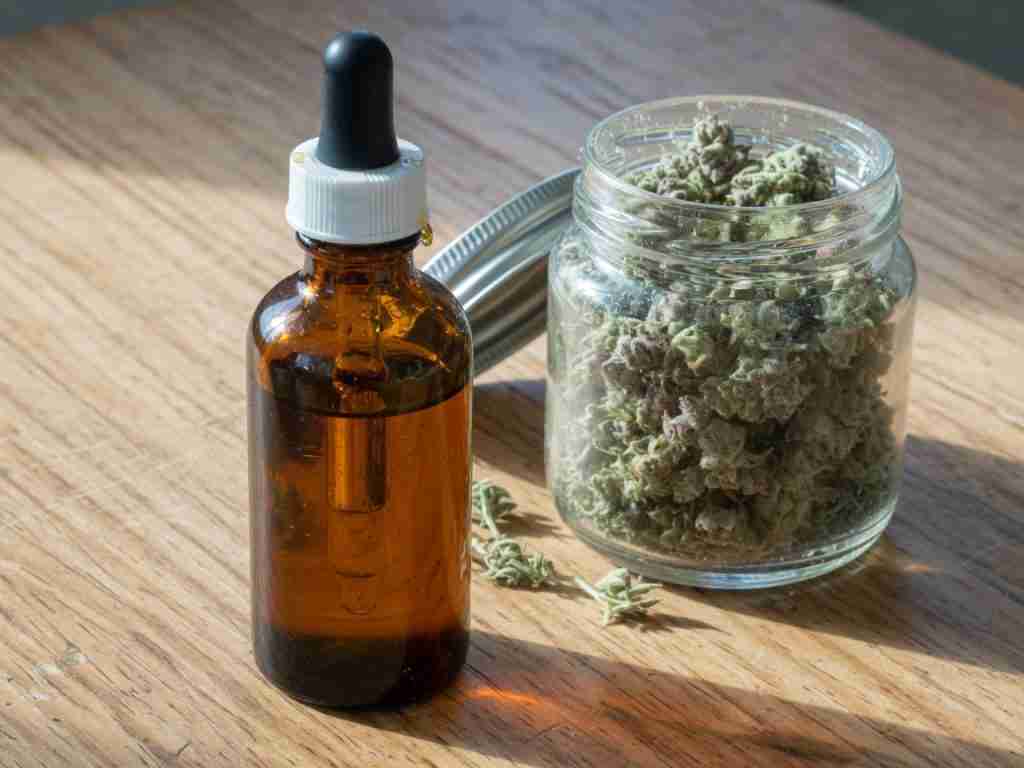
Combustion makes smoke. Smoke is a toxin delivery system that happens to carry cannabinoids. If you inhale hemp, a dry-herb vaporizer at a controlled temperature is the less-bad lung tool. Joints and blunts are the worse-bad tool. “It’s just CBD” does not filter tar. People with asthma, a chronic cough, or a simple wish not to irritate a household should default to oil.
Smell is policy. A tincture in a toiletry bag is a conversation if a security officer wants one. A bag of flower is a conversation you are already having. Hotels, rental cars, and some workplaces treat the sight or smell of flower as cannabis, Farm Bill lecture or not. Flights add a second problem: you can read this site’s fly-with-CBD piece for oils; flower is the format most likely to be treated as a hard no. Do not put buds in a carry-on and hope the CBD label does PR.
Neighbors, kids, and smoke alarms are the rest of the adult filter. Oil does not set off a hallway. Flower might. If discretion is the requirement, the comparison is already over.
- If you need a number in milligrams, buy oil (or capsules). Flower cannot give you that without a scale, a COA percentage, and honest inhalation math you will still fudge.
- If you need a 10-minute onset for a short window, flower or another inhaled route is the pharmacokinetic match — with lung and legal costs attached.
- If you need 4–8 hours, oil or an edible-style swallow is the match. Do not chain-vape flower all evening to fake a tincture curve.
- If you are drug-tested, isolate oil with a matching COA is the lowest-risk hemp format. Flower is a plant with a THC allowance.
- If you have lungs you care about, do not combust. If you still inhale, dry-herb vape, not a convenience-store blunt wrap.
- If you travel, work in a no-cannabis building, or sleep in hotels, oil is the adult format. Flower is how people meet security.
- If you buy flower, weigh doses, keep the COA, store it like you do not want mold, and do not mix it with delta-8 carts from the same counter.
- If you buy oil, use a marked dropper and a log. That is the entire point of the format.
Who should pick which, without the influencer ending
Pick oil if you are new, if you log milligrams, if you want an evening that lasts, if you share air with other people, or if a test or a job is real. Pick flower only if you already understand inhaled cannabis, you have a vaporizer, you have a current COA, and you want a short, obvious window enough to accept lungs and smell. Pick neither if what you actually wanted was a gummy at a party. That is a third format with its own onset and its own sugar.
Do not vape tincture. Mouth oils are not formulated as inhalation liquids. Do not eat a bowl of flower to “skip lungs” and then complain about delay and waste. Do not assume a high-CBD cultivar is THC-free. Read the delta-9 line. If the farm cannot show it, you do not have hemp for legal purposes. You have a bag.
Price per milligram still favors tested oil for most people who just want CBD. Flower pricing is closer to a hobby. If the hobby is the point, be honest and budget for a vape and lab PDFs. If the point is a countable dose, stop looking at buds.
Terpenes are the other ranking-page dodge. Yes, hemp flower smells like a plant. That does not make an untested jar “full-spectrum medicine,” and it does not beat a tincture with a matching cannabinoid panel. If you like the ritual of a dry-herb vape, say that. Do not dress it up as superior wellness. Oil is boring on purpose: milliliters, milligrams, a cap that does not set off a hallway.
FAQ
Is CBD flower stronger than oil?
It is faster, not automatically “stronger.” Inhaled onset is minutes; duration is often 1–3 hours. Oil is slower and usually lasts longer. Strength is milligrams absorbed, which flower will not tell you per puff.
Can I fail a drug test on CBD flower?
Yes. Hemp flower is allowed to contain up to 0.3% delta-9 THC by dry weight, and hot lots exist. Standard tests look for THC metabolites. Isolate oil with a clean COA is the lower-risk format.
Is vaping hemp flower safer than smoking it?
A dry-herb vape avoids some combustion toxins. It is still an inhaled plant. Joints are worse. Neither is a lung-care product. Oil skips the lung question.
Can I take flower through airport security if it is hemp?
Treat flower as cannabis for travel purposes. Hotels, flights, and many officers will not hold a seminar on the Farm Bill while smelling buds. Oil is not risk-free; flower is the louder problem.
Disclaimer: This article is for education only. It is not medical, legal, or travel advice. CBD products are not FDA-approved to diagnose, treat, cure, or prevent any disease, except the prescription medicine Epidiolex for certain seizures. Hemp flower laws and testing methods vary. Talk to a clinician before inhaling or ingesting cannabinoids, and check TSA, airline, employer, and local rules before you pack either format.
