CBD Cannabis Seeds vs High-THC Seeds: Which Is Right for You?
A practical comparison of CBD cannabis seeds and high-THC seeds, including cannabinoid goals, cultivation traits, seed types, and balanced options.

If you are choosing seeds for a new grow, one of the biggest decisions is whether you want CBD-dominant, balanced, or THC-dominant genetics. The strain name alone will not answer that question, and neither will a single potency number. You need to understand the cannabinoid profile and then decide whether it actually fits your goals.
This is where a clear comparison of CBD Cannabis Seeds vs THC Seeds becomes useful. CBD-rich and high-THC cultivars can both be excellent genetics, but they are bred toward different chemical profiles. That difference matters far more than the marketing language around the strain.
The right choice depends on the kind of cannabinoid balance you want, the way you plan to use the finished flower, and the ordinary grow traits that fit your environment. This guide walks through those differences without pretending that CBD plants and THC plants are two completely different species. They are cannabis cultivars with different breeding targets.
The Main Difference Is the Cannabinoid Profile
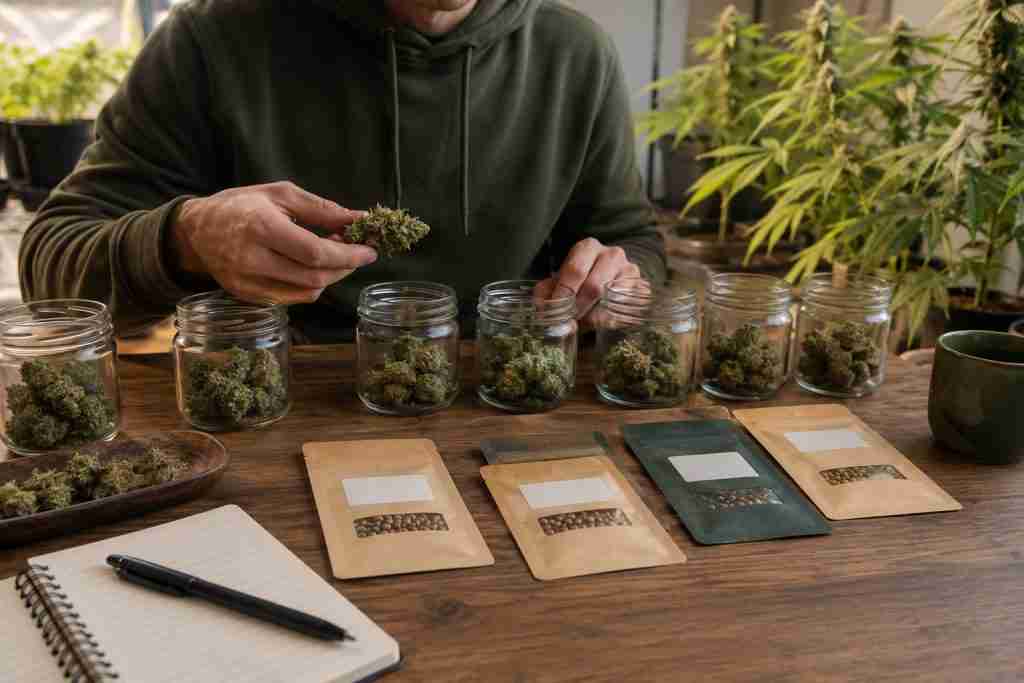
The clearest distinction between CBD-focused seeds and high-THC seeds is what breeders are trying to express in the flowers. CBD cultivars are selected to produce more cannabidiol relative to THC, while THC-dominant cultivars are selected in the opposite direction.
Within the CBD category, you can still have very different profiles. A 1:1 strain may contain substantial amounts of both CBD and THC. A 20:1 CBD-dominant cultivar is targeting a much lower proportion of THC. That means “CBD seeds” is a broad category rather than one single experience.
High-THC seeds are broad too. Some cultivars are extremely THC dominant with very little CBD, while others contain minor cannabinoids in different proportions. The important point is that cannabinoid chemistry is one layer of the strain profile, not the whole plant.
If you want to understand ratios in more detail, read our CBD-to-THC ratio seed guide. It explains why 1:1, 5:1, and 20:1 labels cannot be interpreted the same way.
Choose Based on Your Goal, Not on Which Category Sounds Better
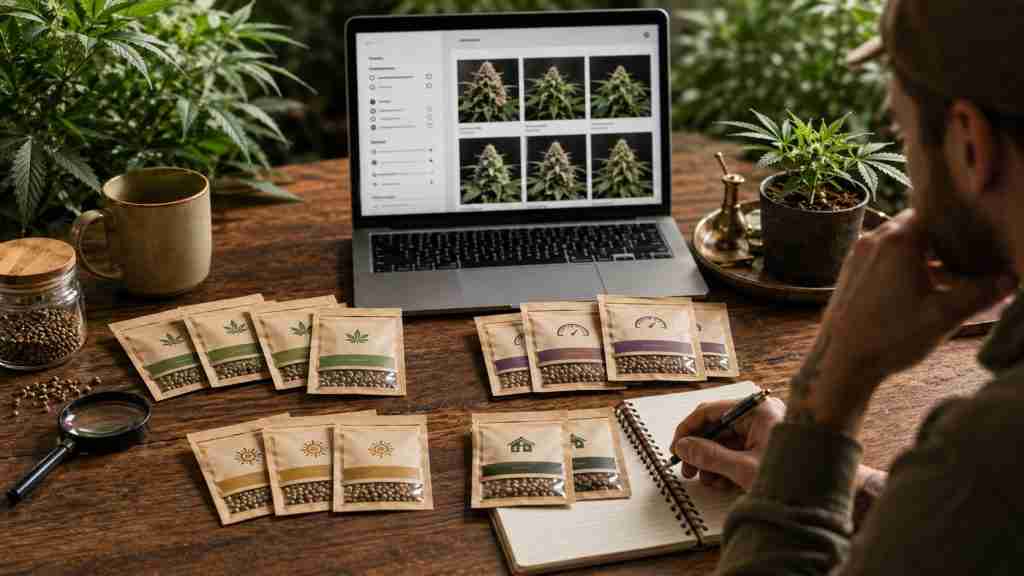
There is no winner in a CBD-versus-THC comparison. There is only a better fit for a specific grower. If you intentionally want THC to dominate the final flower, high-THC genetics make sense. If you want CBD to play a much larger role, CBD-rich genetics are the obvious place to look.
Some growers want a balanced garden rather than choosing one side. They may grow one THC-dominant cultivar and one CBD-dominant cultivar, or select a 1:1 strain that brings both cannabinoids into a single plant. That can be a useful way to build variety into a small personal garden.
Before buying, ask yourself what you are actually trying to achieve. Are you chasing the highest THC number because that is truly your preference, or just because it is easy to compare? Are you interested in CBD because you understand the ratio you want, or simply because the strain has “CBD” in the name?
The best seed choices come from clear goals. Once the goal is defined, the data becomes much easier to use.
CBD Plants Are Not Automatically Easier or Harder to Grow
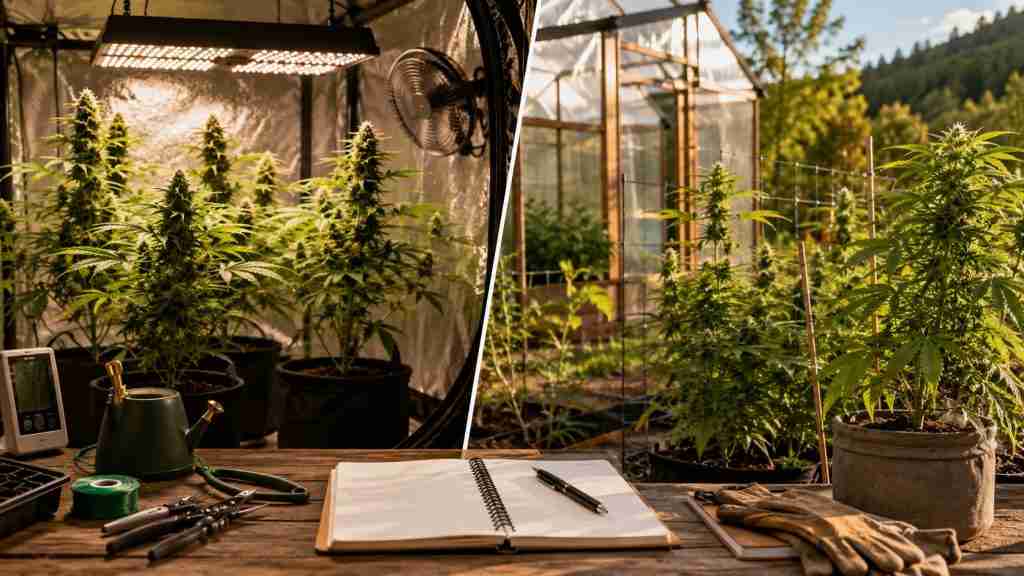
It is easy to assume that CBD strains grow one way and THC strains grow another. In reality, cultivation difficulty comes from the cultivar’s genetics and breeding, not from the CBD label by itself.
You can find compact CBD plants and tall CBD plants. You can find fast THC cultivars and slow THC cultivars. Some CBD lines are beginner friendly, while others are more demanding. The same is true of THC-dominant strains.
That is why you should compare flowering time, height, stretch, climate preference, disease resistance, yield, and grow difficulty separately from cannabinoid chemistry. A strain can have exactly the CBD-to-THC balance you want and still be a poor match for your tent or outdoor season.
Think of the decision as two filters. First, choose the cannabinoid direction. Then choose the plant traits that work in your environment. When both filters line up, you have a much stronger candidate.
Balanced 1:1 and CBD-Dominant Options Give You a Middle Ground
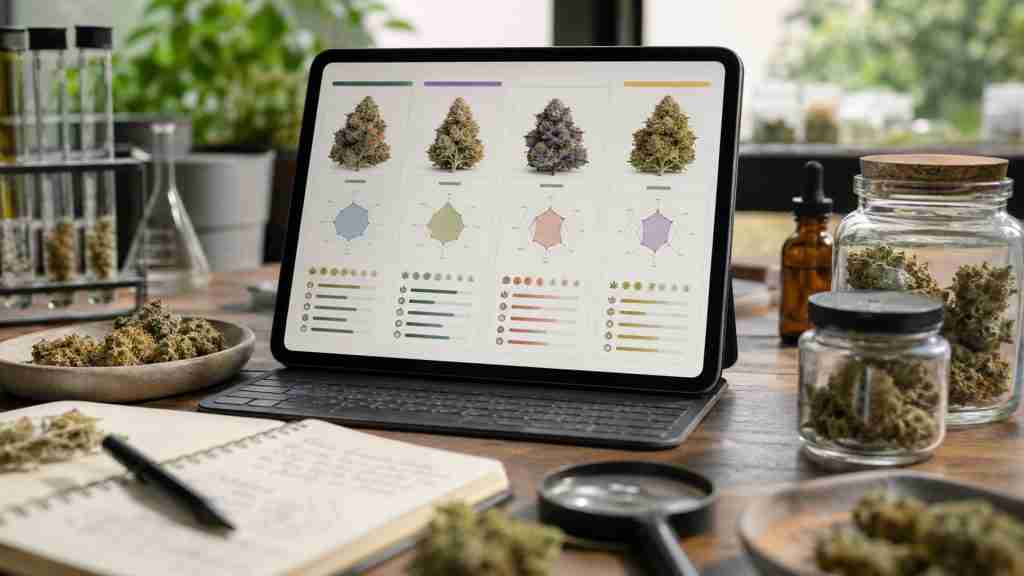
You do not have to choose between “almost all CBD” and “almost all THC.” Balanced strains sit between those extremes. A 1:1 cultivar is bred to express CBD and THC in roughly similar proportions, while moderate CBD-dominant ratios shift the balance toward CBD without removing THC from the picture.
This middle ground is one reason the CBD seed category is more interesting than many people realize. It is not just about ultra-low-THC plants. It includes a spectrum of chemotypes.
When comparing balanced genetics, look at actual percentages as well as the ratio. Ten percent CBD and ten percent THC is different from five percent CBD and five percent THC even though both are approximately 1:1. The ratio tells you the relationship; the percentages tell you the expected concentration.
Balanced genetics are especially useful to consider when you are not convinced that an extreme cannabinoid profile is what you want. They provide another option rather than forcing the decision into two camps.
Feminized, Autoflower, and Regular Seeds Exist in Both Categories
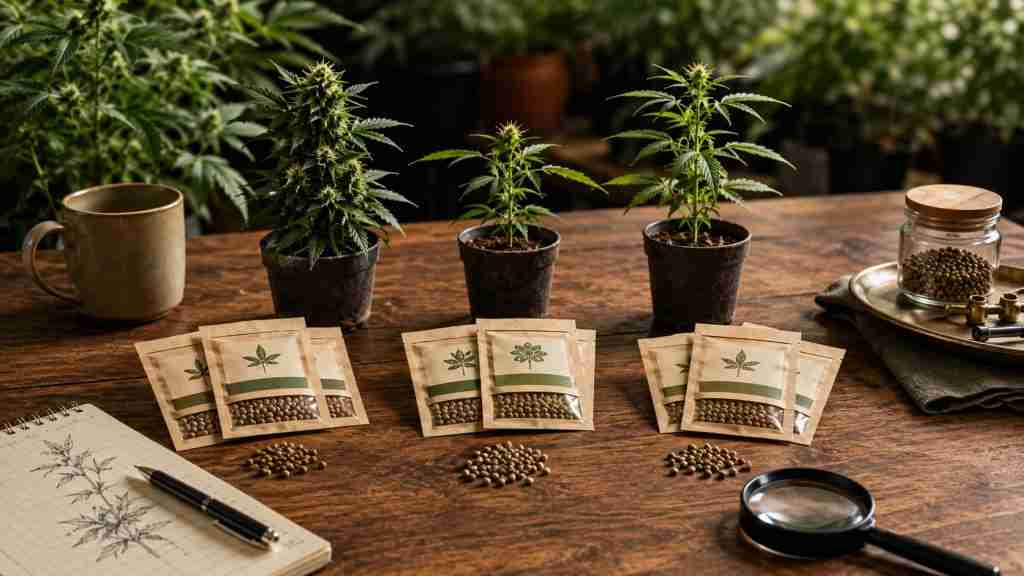
CBD and THC describe cannabinoid direction. Feminized, autoflower, and regular describe seed or flowering characteristics. These are separate choices.
You can buy feminized CBD seeds, autoflower CBD seeds, and in some cases regular CBD genetics. You can do the same across THC-dominant lines. That means your seed-type decision should be based on how you want to grow rather than on which cannabinoid you prefer.
Feminized seeds simplify a flower-focused grow because the line is intended to produce female plants. Autoflowers can shorten the overall cycle and flower according to age rather than a 12-hour light trigger. Regular seeds produce both sexes and are especially useful when breeding or preserving traditional genetic diversity matters.
Do not let the cannabinoid label distract you from this decision. A high-CBD autoflower and a high-CBD photoperiod may share a chemistry goal while behaving very differently in your garden.
Terpenes Still Matter in Both CBD and THC Strains
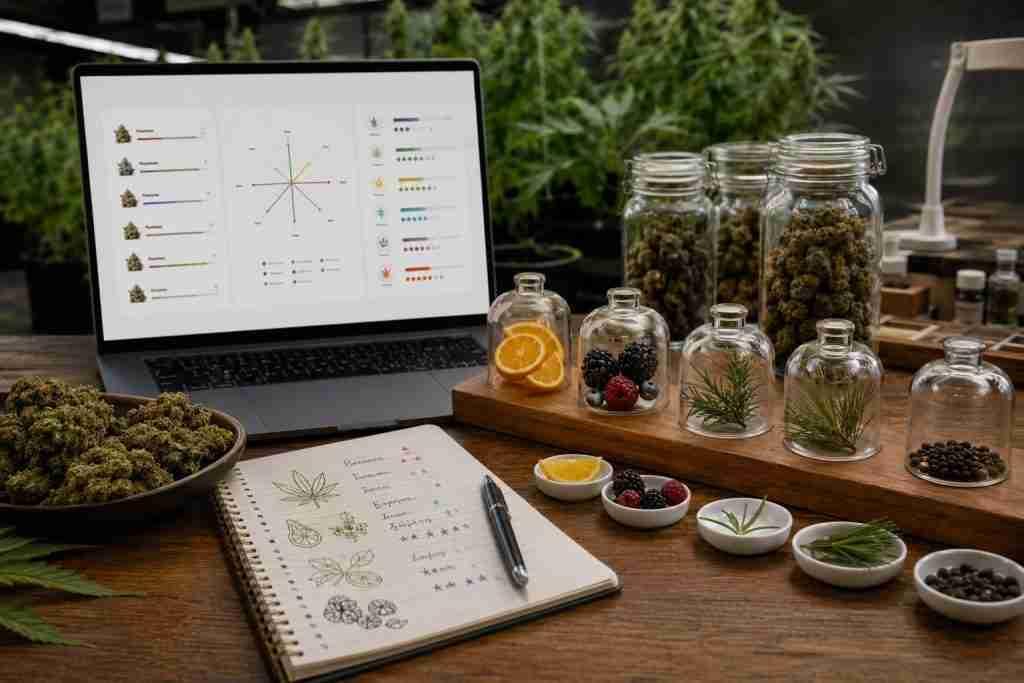
Cannabinoids get most of the attention, but aroma and flavor can be just as important when deciding which plant you want to spend months growing. CBD cultivars can be citrusy, floral, earthy, spicy, piney, fruity, or gassy just like THC-dominant cultivars.
That is because terpene profile is another independent layer of the strain. A CBD-rich cultivar with limonene and pinene may have a completely different aroma character from a CBD-rich cultivar led by myrcene and caryophyllene. The same applies to THC strains.
Terpenes should not be treated as a guaranteed predictor of a specific effect. Research into how cannabinoids and terpenes interact is still developing, and individual response varies. But terpene data is still extremely useful for comparing aroma, flavor, and the overall character of a cultivar.
If you want to add terpene selection to your CBD research, see our guide to terpenes in CBD cannabis strains.
How to Make the Final Choice

Once you remove the marketing language, the decision becomes straightforward. Choose the cannabinoid profile you want, then compare the grow traits that determine whether the cultivar belongs in your environment.
A simple decision process looks like this:
- Decide whether you want THC dominant, balanced, or CBD dominant.
- Compare expected THC and CBD percentages, not just the category name.
- Check the stated ratio if CBD is important to you.
- Choose the seed type that fits your grow style.
- Compare flowering time, size, difficulty, and indoor/outdoor suitability.
- Use terpene profile and aroma as final preference filters.
- Choose a breeder that provides clear, realistic information.
That process is much more useful than asking whether CBD or THC is “better.” The better seed is the one whose chemistry and plant traits match your own goals.
Can You Grow CBD and THC Strains in the Same Garden?

Many personal growers do not need to choose one category exclusively. A mixed garden can include CBD-dominant, balanced, and THC-dominant cultivars at the same time, provided the plants have compatible cultivation needs and the grow is legal where you live.
The main practical challenge is not the cannabinoid difference. It is managing plants with different growth habits. One cultivar may stretch aggressively while another stays compact. One may finish quickly while another needs several more weeks. If you mix strains, compare height, flowering time, feeding tendencies, and environmental preferences before putting them in the same space.
Label plants carefully too. Once several cultivars are growing together, it is easy to lose track of which plant came from which seed pack, especially before flower traits become obvious. Clear labels and simple notes make harvest and later comparison much easier.
A mixed garden can actually be a useful way to learn. It lets you compare plant structure, aroma, flowering behavior, and cannabinoid directions side by side rather than relying only on descriptions.
Why Breeder and Lineage Matter in Both CBD and THC Seeds
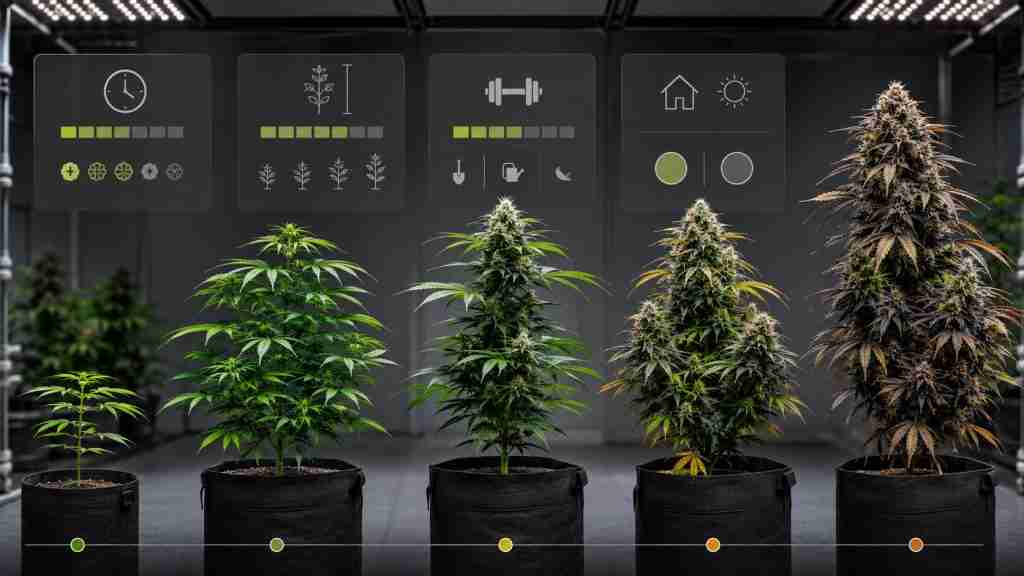
Whether you choose CBD-rich or THC-dominant seeds, the breeder behind the line matters. Two seed packs can use similar strain names while representing different selections, parent combinations, or generations. That can affect plant structure, aroma, consistency, and cannabinoid expression.
Look for enough lineage information to understand what you are buying. A CBD line developed from established CBD-rich parents gives you more context than a generic “high CBD” label with no background. The same principle applies to THC genetics: knowing the parents and breeding goal helps you judge whether the cultivar fits your preferences.
Breeder information is especially valuable when you revisit a strain later. If you liked one version of a cultivar, the breeder and exact line are more useful identifiers than the strain name alone. Cannabis naming is not always standardized, so context matters.
For either chemistry direction, choose genetics with clear documentation. Good information will not make every seed identical, but it gives you a stronger foundation for comparing options and setting realistic expectations.
Do Not Let Price Make the Decision for You
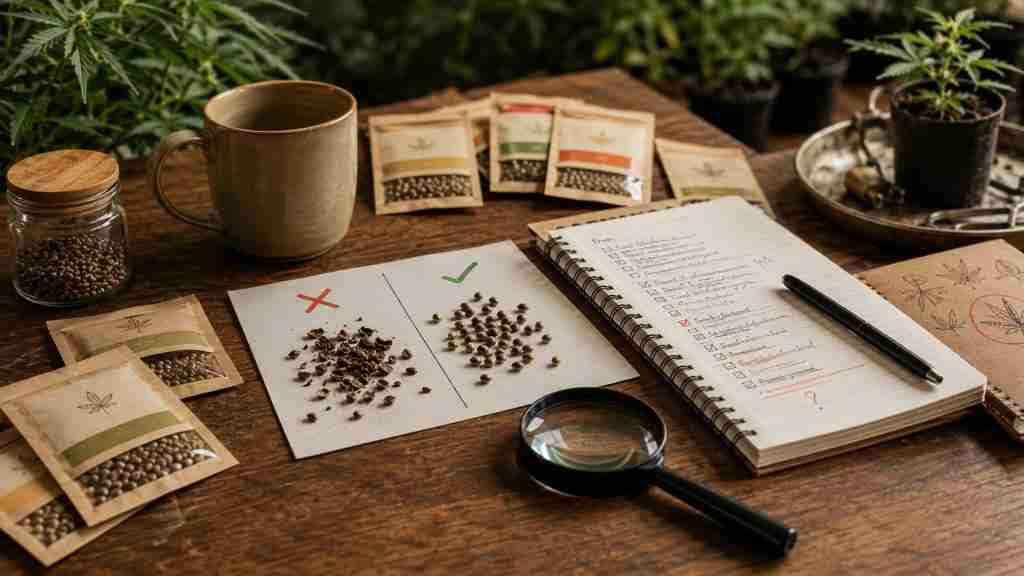
Seed price can influence what you buy, but it should come after chemistry and grow fit rather than before them. A cheap pack of high-THC seeds is not a bargain if you actually wanted CBD-dominant genetics. The same is true in reverse. Buying the wrong chemotype to save a small amount at checkout can waste an entire growing cycle.
Availability can also push growers toward whatever is easiest to find. That is understandable, but it is worth comparing several breeders before settling. CBD-focused lines are less common than mainstream THC cultivars in some catalogs, so you may need to look harder for a ratio, seed type, or growth habit that matches your goal.
When comparing price, look at what you are actually getting: number of seeds, feminized or regular status, autoflower or photoperiod, breeder documentation, and the quality of the cannabinoid information. A more expensive pack with clearer genetic and testing context may be the smarter purchase than a cheaper listing built around vague marketing.
Good seed buying is about the cost of the entire grow, not just the cost of the packet. Genetics are a small part of the total time and resources you will invest, so choose the profile you truly want.
Quick CBD vs THC Seed Checklist
- Do I want a CBD-dominant, balanced, or THC-dominant profile?
- What are the expected CBD and THC ranges?
- Does the strain have a stated CBD-to-THC ratio?
- Is the cultivar suitable for my indoor or outdoor environment?
- Does the flowering time fit my schedule?
- Do I like the terpene and flavor direction?
- Does the breeder provide enough data to make an informed choice?
CBD genetics and THC genetics both have a place. Good seed selection is not about joining one camp. It is about understanding what each profile offers and choosing deliberately.

Related CBD guides

How to Read a CBD Hemp Seed COA: Lot Numbers, Total THC, and What the PDF Does Not Prove
How to read a CBD hemp seed COA: match the lot, tell seed tests from flower tests, convert CBDA/THCA, and spot reused lab PDFs. Not medical advice.

Best Terpenes in CBD Cannabis Strains: What Growers Should Look For
A practical guide to the major terpenes found in CBD cannabis strains and how growers can use aroma, flavor, genetics, and grow traits to compare seeds.
How to Choose CBD Cannabis Seeds by CBD-to-THC Ratio
A practical guide to choosing CBD cannabis seeds by CBD-to-THC ratio, cannabinoid percentage, genetics, seed type, and grow traits.